Many of us have now experienced the power of AI. We have created graphics, written small programs for home automation, generated study notes for technical exams, and used AI to get real work done faster.
The productivity numbers look impressive. Output is up.
But we have also seen the other side: a 20-page PowerPoint deck clearly created from three bullet points of thought, LinkedIn posts that sound reasonable but contain no real insight, and the occasional article where the AI response was accidentally left in.
In other words: AI slop.
I have been working in an AI-native way for the last few months. I hardly ever write an email directly in Outlook anymore, and I rarely build a PowerPoint by moving objects around with a mouse. I draft in Markdown, write in VS Code, and use AI assistants to sharpen language, create variations, and help me build code for my home automation system.
One thing is clear: output goes up. But I have also learned the hard way that more output is not automatically more value. Without curation, even useful AI-generated content can become overwhelming.
I am not talking about incorrect information or low-value AI slop. Even when a document is full of value, the information density might still be too high. When you create content with AI, you have to be conscious of the audience. Is this a stand-alone document that explains a process, or is it an illustration that gives an update?
Here is a negative example: you send out five updates of a business strategy, each created with AI from your knowledge base. Each update is a dense document. Each one looks polished. But because they were generated separately, it becomes incredibly difficult for your audience to see what actually changed.
So what does this mean? We need to be much more conscious of what we create and how it will be consumed. It is easy to create good material. The harder part is helping the audience consume it.
The distinction I now think about is this: AI can create content from source material, but mature AI use means tailoring that content to the audience. You can see the difference in the example below:
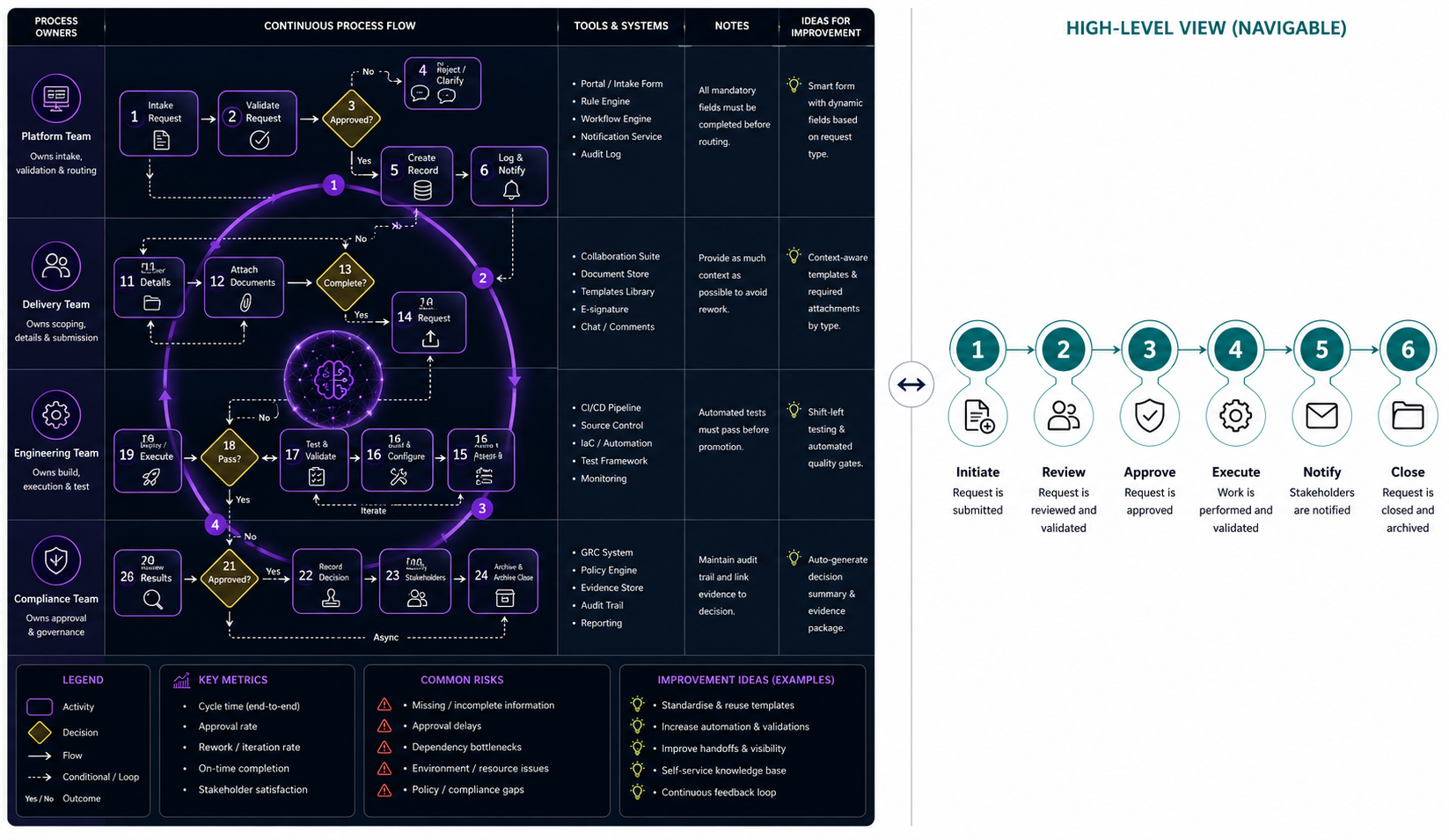
Here is my way of thinking about it:
- I start with a source file, usually a Markdown file that describes a process.
- I can create different versions of the output with very little effort.
- I choose the right level of detail for the audience: dense, high-level, visual, or change-focused.
- When working with feedback, I create a version that clearly highlights what changed, often by applying the feedback directly in Markdown.
The largest problem with AI-generated content is that the information density is not obvious. A document may look polished and complete, but the reader still has to work out what is valid, what is necessary, what has changed, and what came from the creator’s actual judgment rather than from the model filling space.
That is why curation matters. It separates signal from filler.
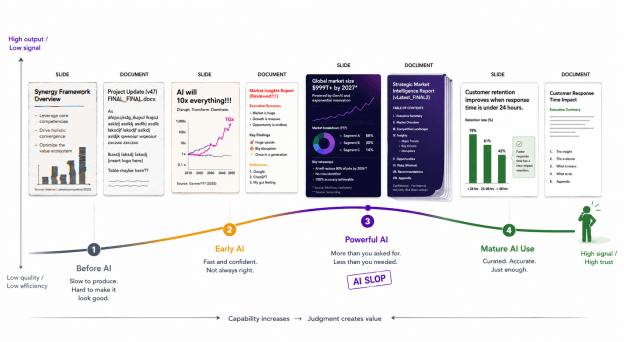
I think of this evolution as a maturity curve. We started with manual content creation, moved into unreliable early AI output, and are now entering a new phase: AI can create reliable content, but we have not yet learned how to curate it well enough for the audience.
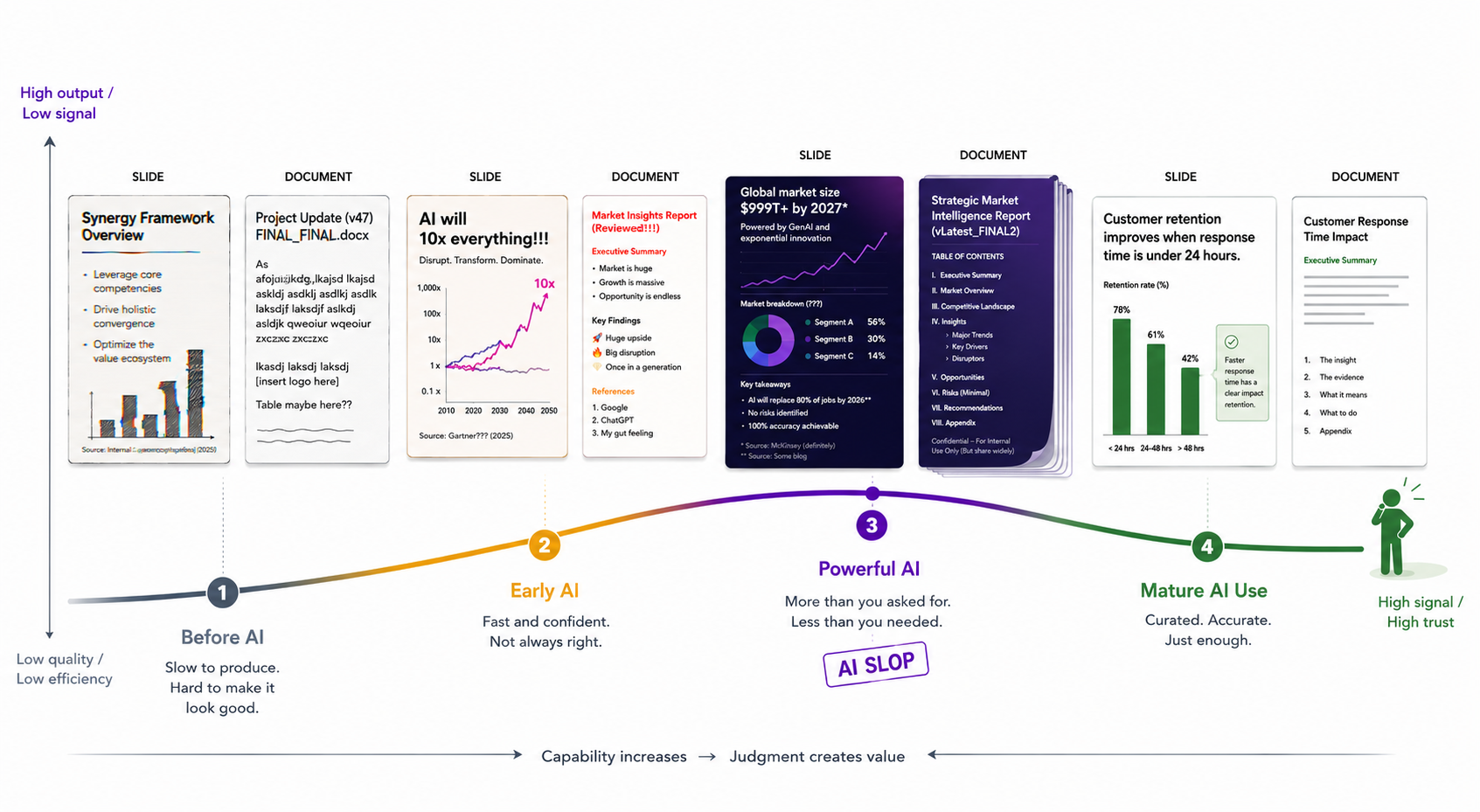
The principle also holds for software. Raw output is not the goal. Useful, understandable, maintainable output is.
Mature AI use is not about producing more. It is about knowing what to produce, what to remove, and how to shape the result so the audience can actually use it.
AI gives us output. Curation turns it into value.

