 Its already over again – the annual get together of the brightest DevOps minds (well the brightest who could make it to Vegas). And in this instance I want to make sure that what happens in Vegas, does not stay in Vegas by sharing my highlights with all of you. It was a great event with a slightly higher focus on operations than last time.
The four trends that I picked up on:
- Self service operations are considered an good answer to the “DevOps Team” problem
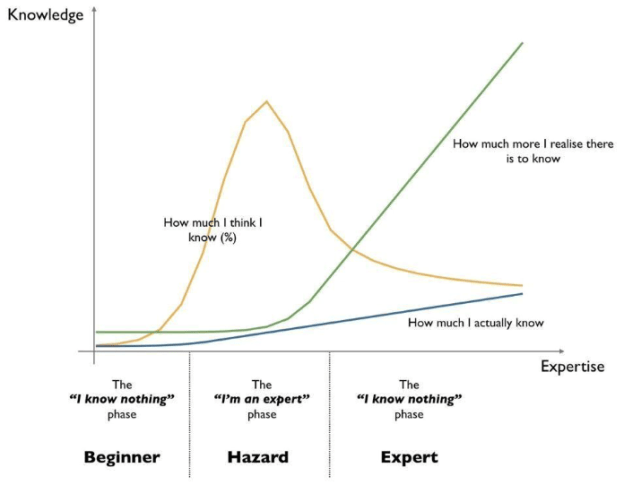
- The prevalence of Dunning Kruger (Link) when it comes to self-assessments -> We are “DevOps”, we use the “cloud”,…
- Minimum Viable Compliance as a new term
- DevOps for AI – I did not see much AI for DevOps yet, perhaps next time
This year the conference focused much more on operations which is great, for next year I hope that we bring in some of the end-to-end business stories. How have we used DevOps practices to drive business – thinks like instrumentalization of software features to understand the business impact.
The top 3 talks
Andrew Clay Shafer
Andrew spoke in his typical eccentric style (with tie on his head) about Digital Transformations and doing DevOps. He made it clear that there is no real end to this transformation and compared it with getting fit (something he took on successfully since the beginning of the year). All the external help you can get will not make you fit, it’s the work you put in yourself. The same is true for this DevOps/Digital transformation. He also made a good point that some message can be dangerous if they are given before the recipients are ready.
J Paul Reed
I admit that I went into “5 dirty words about CI” expecting a talk about Continuous Integration like many others , something John humorously took on in the beginning. The talk focused on Continuous Improvement instead and stood out for me. Key learnings:
- Root causes are a social construct for the point where we stop looking further, more appropriately we should call those “proximate causes”
- A great story from Amazon, who used an outage caused by “human error” to look for the weaknesses in the systems rather than finding fault with the person who made a mistake
- That incidents are not deterministic – there are many parallel universes where the incident might not have happened in the same circumstances, our systems are too complex to be deterministic. The Swiss Cheese model to analyse incidents was a great take away for me.
- Human error is not the cause, it’s the effect. It’s the start of the investigation.
Damon Edwards
Okay, okay he usually is in my top list of talks because I like his style and approach. This time he told a great case study of how all the new fancy technologies and techniques did not prevent the opps problems. Which was a) funny and b) educational to move us away from all the techno-optimism. He then described the self-service operations model which I prefer myself as well, so this was good to see discussed, which is also called out in the latest puppet state of DevOps report.
Some other nuggets from other talks
Courtney Kissler
- First mention of “Minimum Viable Compliance”
- I loved the phrases “Geriatric stack” and “PTSD caused by legacy apps”
- Great story on how compliance can calculate negative ROI to justify investment
Scott Prugh
- Great case study where he showed the results over the years
- Showing how Agile and DevOps work together to achieve huge results
- Aligning teams to Value streams not projects and even using the platform as a product with product owner
- Some interesting aspects on lean portfolio management that is run through several “tanks” like sharktank
- I loved the metric – “% of things releases outside of release cycle”
Jeffrey Snover
- Super inspiring to hear from someone who stood up for what he believed in and that careers can be a bit like snakes and ladders (it took him 5 years to come back from a demotion)
- Insightful to hear about organisations and/or leaders having a list of people who are moving the company forward and of course those are the people that get well rewarded
- How transitions transformations can push your career – introducing the terms stair job vs elevator jobs
- Loved the point that when you are really good at something that doesn’t matter anymore that it will be bad for you (either as organisation or in your career) – great example from DEC which was excellent at something that didn’t matter anymore a and missed the move from vertical integrated to horizontal systems
- He made a point that he believes the pendelum is swinging back to vertical integrated (like Azure and AWS)
- “Build what differentiates you, buy what doesn’t”
Thorsten Volk
- Reiterated the point I have heard a few times now that AI is still similar to the 90s just more accessible and powerful
- Understand what AI and human understanding is good for and when to use what
- Start with a narrow problem and extend it once you have a useful answer
- Treat AI as code – Parameters, training set, data transformation pipeline, etc
- Use public data – there is heaps that you can use to teach your algorithms
- AI is a virtual reality as you can only see what is in the data and that data can be biased
Mik Kersten
- He introduced his new framework to help with the transition from project to product which is described in his new book, which was available at the conference for the first time (I will review it in a blog post in due course)
Rob England
- How some of the new material in the DevOps world has forgotten the old and sometimes is even reinventing it
- Interesting anecdote that the SRE book comes to the conclusion that key metric is unplanned downtime – something the ITSM community has already know
- How DevOps has not covered everything that ITSM covered like user training/Desktop management,… – there is some benefit in review the more rigorous material from ITIL
- Gave us hope that ITIL 4 will be more relevant and easier to consume vs ITIL 3 being a bit of mixed bag
Jez Humble, Nicole Forsgren
- Only 22% of people who say that they use the cloud are following the 5 characteristics of NIST – most hands went down at “OnDemand Self Service”
Cornelia Davies
- Difference between functional and imperative programming
- Why functional programming allows us to do get systems to do more for us and are less error prone because there is no state embedded
- The term “Repave environments” – refreshing every part of the environment which we should do regularly
- Introduced the concept of “Sidecars” – a container next to another container in a Kubernetes pod that deals with cross cutting concerns like security
Another brilliant conference is over and I am already looking forward to next year.
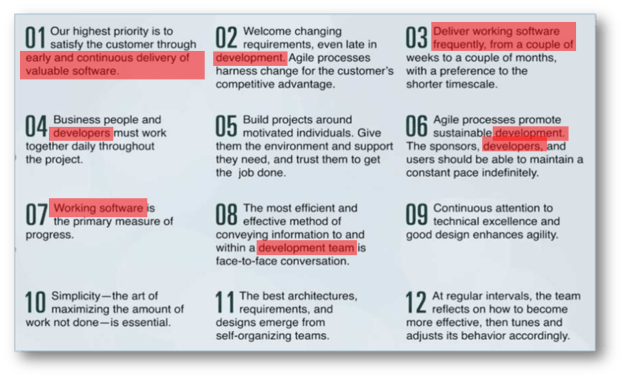
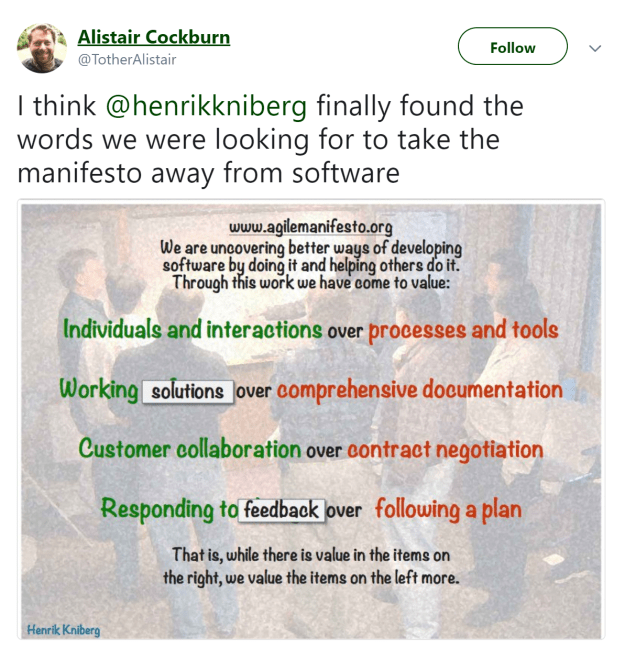
 A few weeks ago I was in group of people and someone made a statement that application management (AM) is commodity and most people in the group agreed. I didn’t say anything but I think application management is one of the most exciting places to be today. There are so many technology trends that apply to AM: Agile, DevOps, Artificial intelligence, etc.
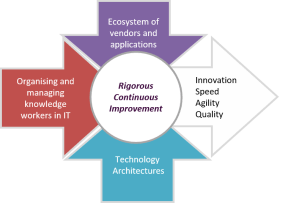

 I like it simple. And I have a somewhat shaky relationship with maturity models as might have gathered from some of my other
  I guess it is time to get back to work. This week I will shift my focus away from teaching my son how to build block towers, how to not kill himself while climbing on and falling off furniture and other required survival skills. I will go back into the complex and exciting world of Agile and DevOps, but before I do this I wanted to share what my paternity time meant for me.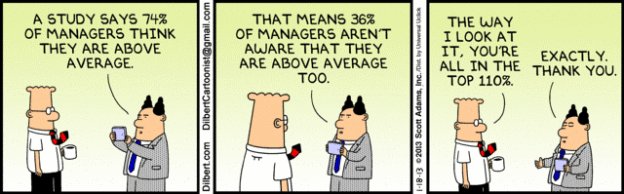
 When I saw a physical copy of the book for the first time in the morning, it was an unreal feeling. There was certainly pride but also a level of disbelief. But damn does it look good 😉 I went on to an interview with Alan Shimmel (which you can find


 Happy New year to you all. I am now half-way through my paternity leave and I will have to admit that the “Father of the year” award might be slightly out of reach for me this year. I will get to that, but first let me tell you that I will write to the government and make it clear that this should not be called paternity leave. It is paternity work. I have so much respect for all those full-time parents, your day is fully organised by eating, putting little one to bed, cleaning up, making food, changing baby,… I am keeping up with the schedule but will admit that my wife sent me some handy SMS reminders during the day in the beginning. And then you need to use the few free moments to get the basics done: Shower, eat, check on the Ashes and soccer results,…
 Not A Factory Anymore